tickdeals

Complete Guide to Choosing the Right Dog Food
Choosing the right dog food is one of the most important decisions you can make as a pet owner. A balanced and nutritious diet supports your dog’s growth, energy levels, immune system, and overall well-being. With countless brands and formulas available, finding the best option can feel overwhelming. This guide will help you understand what to look for when selecting dog food and how to make the best choice for your furry companion.
Why Choosing the Right Dog Food Matters
Your dog’s diet directly impacts their health and quality of life. High-quality dog food provides essential nutrients that support healthy muscles, bones, skin, coat, and organs. Poor nutrition, on the other hand, can lead to obesity, digestive issues, nutrient deficiencies, and other health problems.
Every dog has unique nutritional needs based on factors such as age, size, breed, activity level, and health conditions. Selecting food that meets these requirements helps ensure your pet stays happy, active, and healthy for years to come.
Understand Your Dog's Life Stage
Dogs require different nutrients at various stages of life. Choosing food formulated for your dog’s age is crucial.
Puppies
Puppies need nutrient-dense food rich in protein, healthy fats, vitamins, and minerals to support rapid growth and development. Puppy-specific formulas are designed to meet these increased nutritional demands.
Adult Dogs
Adult dogs require a balanced diet that helps maintain healthy body weight, muscle mass, and energy levels. Their food should provide complete nutrition without excessive calories.
Senior Dogs
Older dogs often benefit from food that contains fewer calories, added joint-support ingredients, and nutrients that support cognitive health. Senior formulas can help address age-related changes and keep older pets comfortable.
Check the Ingredient List
The ingredient list can tell you a lot about the quality of dog food.
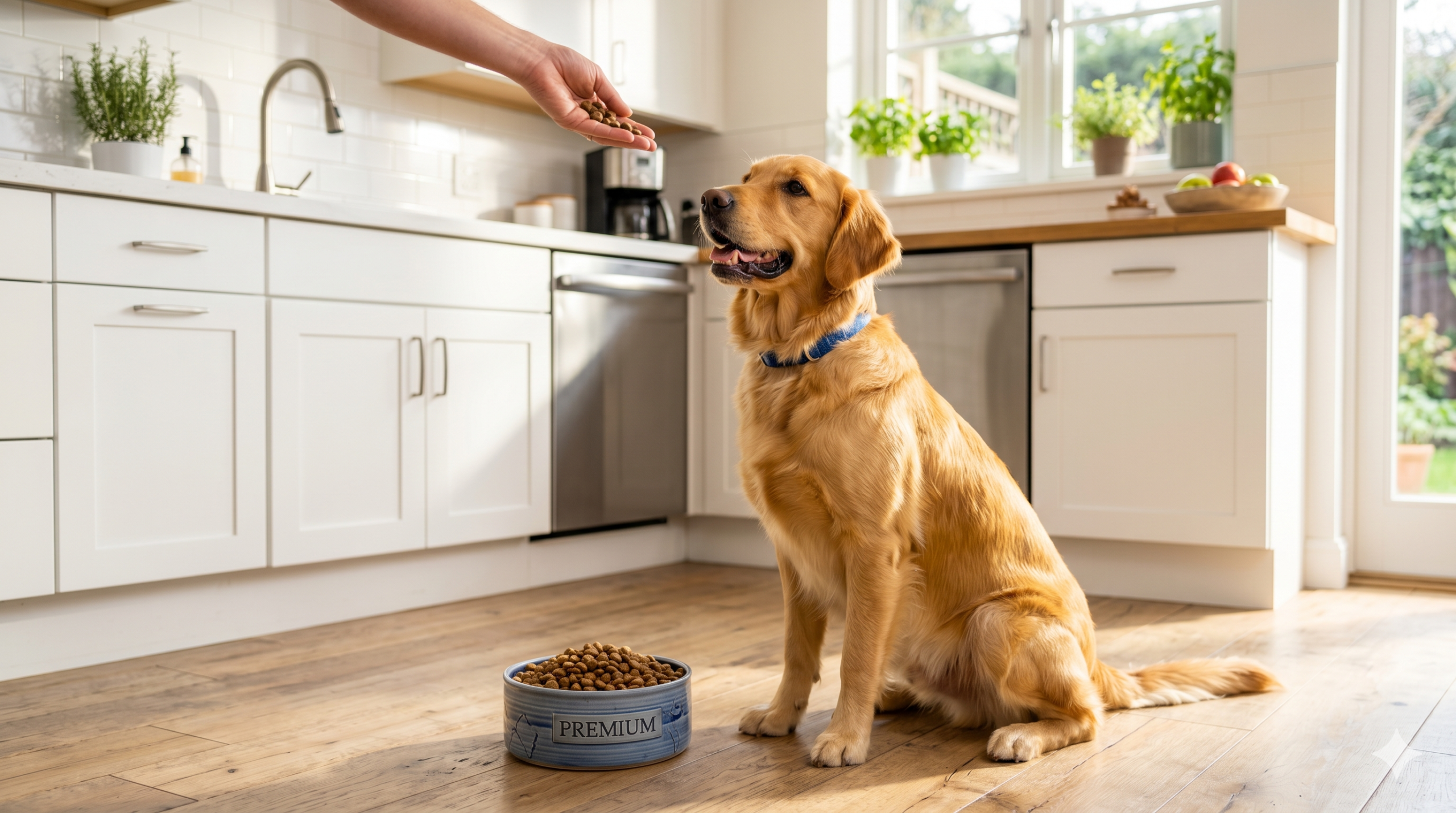
Look for foods that list a real protein source, such as chicken, beef, lamb, turkey, or fish, among the first ingredients. Protein is essential for muscle development and overall health.
It’s also beneficial to choose foods that contain wholesome ingredients such as vegetables, fruits, and healthy grains when appropriate. Avoid products with excessive fillers, artificial preservatives, colors, or flavors whenever possible.
Reading ingredient labels carefully can help you identify foods that offer better nutritional value for your dog.
Consider Your Dog's Size and Breed
Different breeds and sizes have different dietary needs.
Small Breeds
Small dogs typically have faster metabolisms and may require calorie-dense food with smaller kibble sizes that are easier to chew.
Medium Breeds
Medium-sized dogs generally need balanced nutrition that supports healthy weight management and daily activity.
Large and Giant Breeds
Large breeds often benefit from formulas designed to support joint health and controlled growth. These foods may contain ingredients such as glucosamine and chondroitin to help maintain mobility.
Certain breeds may also be more prone to specific health concerns, making breed-specific nutrition worth considering in some cases.
Dry Food vs. Wet Food
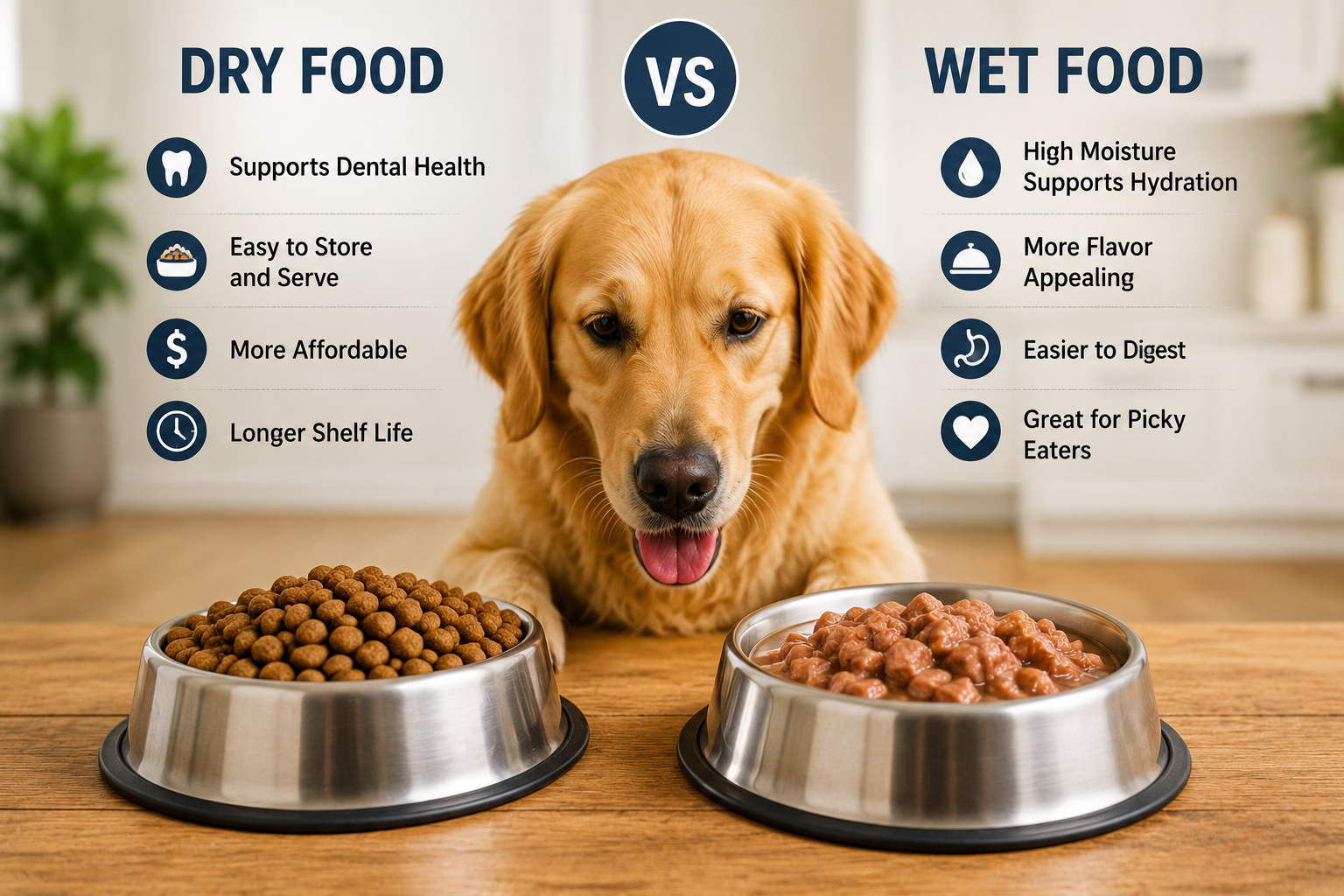
Many pet owners wonder whether dry food or wet food is the better option. Both have advantages.
Dry Food
- Generally more affordable
- Easy to store and serve
- Helps reduce plaque buildup on teeth
- Often available in larger quantities
Wet Food
- Higher moisture content supports hydration
- Often more appealing to picky eaters
- Easier for dogs with dental issues to consume
Some pet owners choose a combination of both dry and wet food to provide variety and additional benefits. The best choice depends on your dog’s preferences, health needs, and your budget.
Watch for Food Allergies and Sensitivities
Food allergies and sensitivities can affect dogs of any age. Common symptoms may include:
- Excessive itching or scratching
- Skin irritation
- Ear infections
- Digestive problems
- Vomiting or diarrhea
Certain ingredients, such as specific proteins or grains, may trigger reactions in sensitive dogs. If you suspect a food allergy, consult your veterinarian for guidance. They may recommend an elimination diet or specialized food to identify and manage the issue.
Monitoring your dog’s response to new foods can help you detect potential sensitivities early.
Look for Nutritional Balance
A good dog food should provide a complete and balanced combination of nutrients, including:
- High-quality protein
- Healthy fats
- Carbohydrates for energy
- Essential vitamins
- Important minerals
- Omega fatty acids for skin and coat health
Balanced nutrition helps support every aspect of your dog’s health, from digestion and immunity to energy levels and overall vitality.
Avoid choosing food based solely on marketing claims. Instead, focus on the nutritional profile and ingredient quality.
Transition Food Gradually
Switching your dog’s food too quickly can lead to digestive upset. A gradual transition allows your dog’s digestive system to adapt to the new diet.
A common approach is:
- Days 1–2: 75% old food, 25% new food
- Days 3–4: 50% old food, 50% new food
- Days 5–6: 25% old food, 75% new food
- Day 7 onward: 100% new food
Monitor your dog during the transition and consult a veterinarian if digestive issues persist.
Frequently Asked Questions
How do I know if my dog is eating the right food?
Signs of a healthy diet include a shiny coat, healthy skin, consistent energy levels, normal digestion, and maintaining an ideal body weight.
Is grain-free dog food better?
Not necessarily. Grain-free diets may be beneficial for some dogs with specific sensitivities, but many dogs can safely and effectively digest grains. Consult your veterinarian before making dietary changes.
How often should I feed my dog?
Feeding frequency depends on your dog’s age, size, and activity level. Most adult dogs do well with two meals per day, while puppies may require more frequent feeding.
Can I mix wet and dry dog food?
Yes. Many pet owners combine wet and dry food to add variety and improve palatability while maintaining balanced nutrition.
Should I consult a veterinarian before changing my dog’s food?
Yes. A veterinarian can recommend the most appropriate diet based on your dog’s age, breed, health status, and specific nutritional needs.
Conclusion
Choosing the right dog food is essential for supporting your pet’s long-term health and happiness. By understanding your dog’s life stage, evaluating ingredient quality, considering breed and size, and ensuring nutritional balance, you can make an informed decision with confidence. Remember to transition foods gradually and consult your veterinarian whenever you have concerns about your dog’s dietary needs. A well-chosen diet can help your canine companion thrive throughout every stage of life.
sing up our newsletter
Sign up today for hints, tips and the latest product news - plus exclusive special offers.
About Us
Pet Food & Accessories